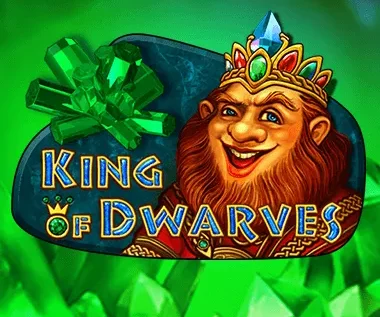

King of Dwarves

At 95.54% RTP, the King of Dwarves slot carries a 4.46 percentage-point house edge. Over 1,000 spins at €1 stake, expected return sits near €955.40, leaving €44.60 as long-run expected loss before variance.
The game is an Amatic Industries video slot with a fantasy treasure frame, 5 reels, 3 rows, and 10 paylines. The useful player profile is analytical: check the paytable, understand the wager scale, and treat RTP as expected value rather than a session forecast.
RTP describes long-run return across a large sample. It does not predict one session, one bonus, or one short spin block. Individual outcomes still come from a probability distribution, so a small sample can sit far above or below expected value.
Search results for this title often mix casino, fantasy, and game-lore intent. Queries around King of Dwarves Lord of the Rings, King of Dwarves Shattered Pixel Dungeon, and King of the Dwarves: underground city builder point elsewhere. This article covers the Amatic Industries casino game only.
Amatic Industries lists a compact 5×3 structure with 10 paylines and 95.54% theoretical RTP. That creates a clean mathematical baseline: 955.4 units returned per 1,000 units wagered in long-run terms. The house edge therefore equals 44.6 units per 1,000 units staked.
| Stat | Value |
|---|---|
| Game title | King of Dwarves |
| Developer | Amatic Industries |
| Game type | Video Slots |
| Grid layout | 5 reels x 3 rows |
| Paylines | 10 |
| RTP | 95.54% |
| House edge | 4.46% |
| Betting range | 10 to 1000 coins |
| Core features | Bonus symbols, substitution symbols, free spins, respins, wild |
| Theme | Dwarf, gnome, castle, crystals, gems, jewelry, treasures |
The important point is separation. Published numbers support RTP and structure analysis. However, payout-ceiling modelling needs the in-game paytable before serious bankroll comparisons. The same separation applies to feature claims: a listed feature confirms that the symbol or event exists, while the help screen explains trigger counts, symbol exclusions, and whether any multiplier or reel-locking rule is attached.
The design uses dwarf and gnome fantasy elements around a castle-stone setting. Chest, crystals, gems, jewelry, and treasure symbols form a clear paytable hierarchy. Red and blue elements help separate symbol groups on the 5×3 frame.
This is not a lore article, and it should not borrow claims from non-casino results. The slot uses a fantasy-treasure theme as symbol logic, not as Tolkien analysis or role-playing lore. Consequently, the useful question remains mathematical: which symbols alter line probability?
The 10-payline layout also matters visually. Fewer line paths reduce screen noise compared with high-way formats. Therefore, symbol recognition carries more value than decorative detail in this specific design. A smaller line set also makes post-spin checking easier, because a player can compare visible symbols against the paytable without tracking dozens of overlapping routes.
🎯 Did You Know? Medieval mining communities often linked gems, metalwork, and guarded treasure in folklore. That explains why dwarf themes often use crystals, chests, and stone halls together.
The design works because it supports paytable reading. Its value comes from readable reels, not from unsupported claims about animation or sound.
The phrase how to play King of Dwarves starts with the reel structure. The game runs on 5 reels and 3 rows. Wins use 10 paylines, so outcomes depend on symbol alignment across active line paths.
The betting range runs from 10 to 1000 coins. A 10-credit spin and a 1000-credit spin carry the same RTP percentage. However, the larger stake scales both expected loss and variance exposure. At the top stake, one spin risks one hundred times the credit amount of the minimum spin, so a short losing sequence has a much larger bankroll effect even though the mathematical return rate is unchanged.
For every 1,000 coins wagered, theoretical expected return equals 955.4 coins. The expected loss equals 44.6 coins. This is expected value, not a promise that any single block returns that amount.
💡 Pro Tip: Before raising stake size, open the paytable and confirm line rules. A larger wager only changes absolute exposure, not the 95.54% RTP.
The base game is structurally simple. Reels, paylines, stake range, and RTP define the core experience before any feature event occurs.
The King of Dwarves bonus structure uses confirmed bonus symbols, free spins, respins, wilds, and substitution symbols. Each feature changes the outcome distribution. None changes the built-in house edge.
Bonus symbols matter because they can connect base play with feature states. The exact trigger rule belongs in the game help screen. Therefore, stake decisions should wait until the paytable confirms the symbol conditions. If the trigger requires scatter-style collection rather than payline placement, the evaluation differs from a normal line win and should be read directly before wagering.
King of Dwarves free spins move part of the expected value into bonus play. Free spins can create extra reel outcomes without a fresh stake per awarded spin. However, those outcomes still sit inside the overall 95.54% RTP model.
Wilds and substitution symbols affect line completion. They can stand in for regular paying symbols, subject to paytable exclusions. Consequently, they improve combination formation without making any result certain.
Respins add another event layer. A respin can give the game another reel evaluation after a qualifying event. The paytable controls whether symbols hold, reels respin, or special rules apply.
⚡ Quick Fact: Wilds and substitution symbols affect probability before payout size. They increase line-completion chances, but they do not remove the 4.46% house edge.
The feature set is conventional, but relevant. Wilds alter line probability, free spins shift value into feature play, and respins widen short-run variance.
King of Dwarves RTP equals 95.54%, according to Amatic Industries. This means the theoretical long-run return equals 955.4 units per 1,000 units wagered. The complementary house edge equals 4.46%.
RTP should never be read as a marketing label alone. It is the average return rate over a very large outcome sample. Short play can deviate sharply because variance sits around the mean.
The 10-payline format gives a readable base-game distribution. However, free spins and respins add feature-state outcomes. Consequently, a session can feel uneven even when the long-run return rate remains fixed. The absence of a confirmed max-win figure also means the top-end payout profile should not be guessed; the safer comparison point is expected loss per turnover.
⚠️ Caution: A 95.54% RTP still carries negative expected value. Increasing stake after losses only increases absolute exposure to the same house edge.
At 10 coins per spin, 100 spins create 1,000 coins in total wagers. The theoretical long-run return is 955.4 coins. The expected-value cost is 44.6 coins before variance.
At 100 coins per spin, the same 100-spin block creates 10,000 coins wagered. The theoretical return becomes 9,554 coins. The expected-value cost becomes 446 coins.
At 1000 coins per spin, only 100 spins create 100,000 coins in turnover. Expected return becomes 95,540 coins, while expected loss becomes 4,460 coins. Therefore, stake scaling changes financial risk faster than it changes information gained.
The payout profile therefore rewards conservative interpretation. RTP gives a strong baseline, while feature-state variance controls short-session spread. A useful practical check is to divide the bankroll by planned stake size before play; if the result leaves too few spins to absorb normal losing streaks, the selected stake is too aggressive for that session plan.
King of Dwarves strategies should focus on exposure control. No staking pattern changes the 95.54% RTP. No loss-chasing system reverses the 4.46% house edge.
A rational plan starts with the smallest comfortable stake. Then calculate total wager volume before spinning. If 100 spins at 10 coins create 1,000 coins in turnover, the expected-value cost is 44.6 coins.
Paytable verification also has value. Check free spins triggers, bonus symbol rules, wild exclusions, and respin behavior. Similarly, confirm whether paylines are fixed or adjustable before staking. If paylines are fixed, reducing the wager may require changing coin value or total bet rather than disabling lines, so the stake screen should be checked before the first paid spin.
A cautious session can use 50 spins at 10 coins. That creates 500 coins in turnover and 22.3 coins of theoretical expected loss. A stop-loss near 150 coins keeps variance from consuming the whole balance.
A standard session can use 100 spins at 10 coins. That creates 1,000 coins in turnover and 44.6 coins of expected-value cost. A stop-loss near 300 coins keeps the plan bounded.
A high-exposure session can use 100 spins at 100 coins. That creates 10,000 coins in turnover and 446 coins of expected-value cost. This stake only makes sense when the bankroll absorbs large negative swings.
Adults only, 18+, and local law should control access. For support, Gamblers Anonymous UK offers help for gambling harm. The Nevada Gaming Control Board also illustrates why licensed oversight matters in regulated markets.
Bankroll math does not make the game positive expectation. It simply keeps loss limits, stake size, and variance band under control.
King of Dwarves gameplay uses a compact 5×3 reel window. That structure should translate cleanly to mobile screens because the line count stays modest. Still, the casino implementation controls button layout and paytable access.
Mobile play demands careful stake reading. Small screens can make credit values easier to misread. Therefore, verify the 10 to 1000 coins range before real-money play. Also check whether the interface shows total bet, coin value, or both, because confusing those labels can turn a small planned session into a much higher turnover block.
Desktop play gives more room for paytable checks. That helps when confirming feature rules, line paths, and substitution exceptions. It also reduces accidental stake changes during longer sessions.
If the same certified version runs on both platforms, RTP should remain constant. Platform choice changes usability, not expected value. The key verification point remains the game help screen.
Cross-platform play is acceptable when the paytable stays clear. Desktop has the edge for pre-play analysis and rule checking.
The King of Dwarves (Amatic Industries) review should treat the game as standalone. No direct sequel structure follows from the published facts. It is also not a Megaways title because the layout uses 5 reels, 3 rows, and 10 paylines.
For unrelated titles with similar naming, Slotwhale also lists King of Cards, King of Cats, King of Kings, and King of Slots. These are browsing references, not proof of a shared series. Therefore, comparison should stay limited and factual.
Search confusion remains a practical issue. Fantasy wording can pull in role-playing games, city-builder pages, and dwarf-lore queries. The casino review angle differs because it evaluates RTP, paylines, stake range, and features. That distinction matters for readers comparing pages: a casino-game review should answer wager structure and return questions, not summarize unrelated adventure or strategy titles.
The title should be read as a standalone Amatic video slot. Its evaluation rests on measurable structure rather than franchise assumptions.
Base play runs through 10 paylines on a 5×3 grid. Wilds and substitution symbols can improve line-completion probability. Bonus symbols, free spins, and respins add feature-state outcomes to the distribution.
The experience has a traditional payline rhythm. It does not depend on huge reel arrays or variable-way mechanics. Instead, it uses a smaller rule set with feature events layered above the base game.
Stake flexibility is meaningful because the range spans 10 to 1000 coins. However, higher stake does not improve expected value. It only increases absolute gains, losses, and variance exposure. The best analytical use of the range is controlled scaling: test the rules at the low end, then raise stake only if the planned bankroll, stop-loss, and session length still make sense together.
Start at the lower end of the stake range while reading the paytable. Then set a fixed session length before the first spin. Stop-loss and stop-win rules prevent short-term variance from dictating stake changes.
Do not raise stakes after a dry segment. That converts variance frustration into larger expected loss. Instead, treat each spin as a new draw from the same probability distribution.
The verdict is narrow but useful. This is mathematically readable on RTP, structured around 10 paylines, and dependent on paytable confirmation for feature details.
The RTP is 95.54%. King of Dwarves RTP therefore implies a 4.46% house edge. That figure describes long-run theoretical return, not one-session performance.
Select a stake between 10 and 1000 coins, then spin the 5 reels and 3 rows. Wins use 10 paylines according to the paytable. Wilds, substitution symbols, bonus symbols, free spins, and respins form the listed feature set.
Yes, free spins appear in the listed features. The game help screen should confirm the exact trigger rule. Those spins remain part of the 95.54% RTP model.
The bonus setup includes bonus symbols, free spins, respins, wilds, and substitution symbols. The paytable controls exact activation rules. Bonus events change outcome shape, not the long-run house edge.
Use the in-game paytable for payout-ceiling checks. This review does not estimate a multiplier. Without that value, the upper tail of the probability distribution needs direct paytable confirmation.
Use the paytable and casino help screen for variance guidance. A reliable label needs certified math or provider-level disclosure. The confirmed features suggest event variance, but the degree needs verification.
Amatic Industries makes the game. The studio lists a 5×3 grid, 10 paylines, 95.54% RTP, and a 10 to 1000 coins betting range. That makes the review primarily math-led.
Yes, many licensed casinos can host video slots on mobile. Check the game screen for stake, paylines, and paytable access before wagering. The same certified version should keep the same RTP.
King of Dwarves is mathematically transparent on RTP, but paytable review remains essential. The 95.54% return rate gives a usable expected-value baseline. The 5×3 grid and 10 paylines keep the probability model readable.
⭐ Our Verdict
This is a traditional Amatic payline game with a clear house-edge profile. The strongest reason to review it is structure, not hype. Conservative stake sizing remains the rational default.
👥 Best For: Fantasy-treasure slot readers get a dwarf, castle, crystal, and chest theme. Analytical bankroll users get clearer value from the RTP than from vague payout claims. Paytable-first players will extract the most reliable information before real-money play.
This review is verified periodically against the latest game data and casino paytables. Play responsibly, and treat King of Dwarves as an 18+ gambling product with negative expected value.
You can play King of Dwarves at the licensed operators we rate highest, including our free spins casinos, crypto casinos, crypto slots sites, the best slots casinos and fast-paying casinos.
Play responsibly. 18+ only. For free, confidential support visit BeGambleAware.